
For contributors
Turn the work you already do into real-world data.
- Participation
- Project-based
- Location
- Your own environment
- Selection
- Active projects only
Who we work with
People who know their environment.
The best recordings come from people who do the work regularly. You do not need a studio or a production crew — you need a real environment, a clear brief and the ability to record consistently.
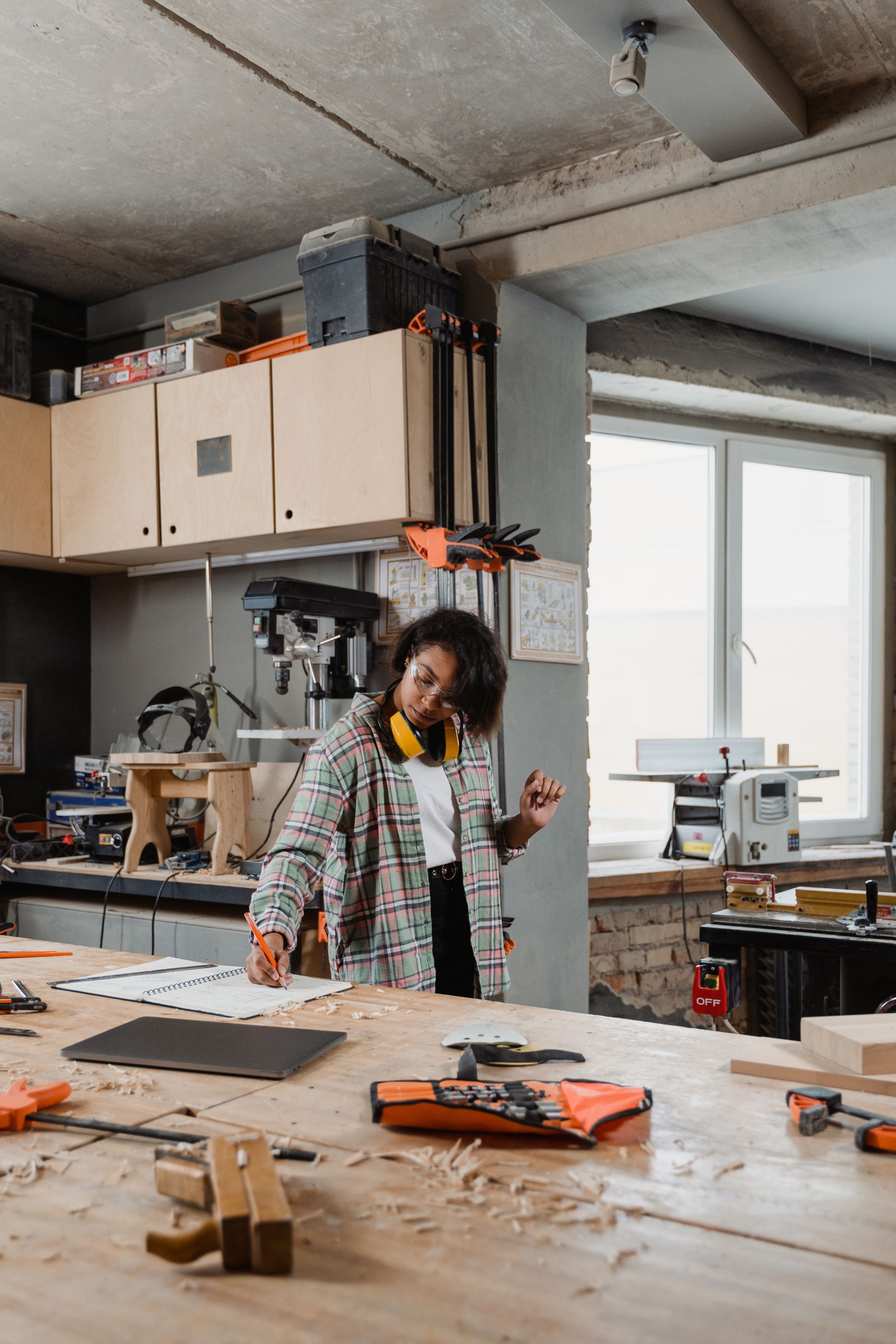
We work with contributors across construction, woodworking, manufacturing, agriculture, household work and skilled trades. Projects are matched to the environment and region a buyer needs.
- Access to a relevant workplace or home environment
- A head-mounted camera, or willingness to use one
- Ability to follow a simple recording brief
- Reliable file submission on time
Head-mounted only
We collect POV video from a camera worn on your head. Chest rigs, tripods, stands and handheld phones do not produce the first-person view our projects need, so we cannot accept footage recorded that way.
Take me to the formOpick is not a gig marketplace. We do not promise a set number of projects or guaranteed earnings. We contact contributors when a collection matches their environment and location.
How participation works
From application to a reviewed submission.
Participation is organised around specific collection projects. Here is the process from first contact to submitting footage.
Apply
Tell us where you are based and what kind of work you do. Applications are reviewed against active projects.
Match
If your environment and activities fit a current collection, our team will contact you with the details.
Brief
Selected contributors receive head-mount setup guidance, consent requirements and a clear task list before starting.
Record and submit
Capture the agreed tasks, then submit the footage for review. Payment terms are agreed per project in advance.
Recording expectations
Clear, consistent, consented footage.
Recording requirements are set per project. Every project is captured from a head-mounted camera, so the view matches what the person doing the task sees. We explain the setup, framing and file handling before you begin.
Camera setup
Accepted
- A head strap, cap or helmet mount — a camera worn on your head.
- The view from your own eyes, angled down at your hands and the work.
- Continuous clips of the real task, recorded in your own workspace or home.
- 1080p or higher, landscape, no filters, crops or added text.
Not accepted
- Chest-mounted rigs, harnesses and body cameras.
- Tripods, stands, desk mounts or a phone held in your hand.
- A second person filming you while you work.
- Screen recordings, edited compilations or clips re-uploaded from elsewhere.
The perspective has to come from your eyes, looking down at your hands and the work — not from your chest, a stand or someone standing behind you.
Recording rules
What you must do. What we never accept.
These rules apply to every project, in every environment. Footage that breaks them is rejected, and repeated violations end participation.
Always
- Wear the camera on your head so the shot follows your own eyes.
- Get permission from whoever owns or manages the space before recording.
- Tell anyone who may appear on camera what is being recorded and why.
- Record only the tasks in the brief, in a real workplace or home.
- Keep your hands, tools and the work surface in view for the whole task.
- Stop recording and ask us whenever the task, the space or a person in it is unclear.
Never
- No recording without permission — not on a site, in a home or in any business you do not control.
- No children in the video. If a child enters the room, stop recording.
- No sexual, nude or suggestive content, and no recording in bathrooms, bedrooms or other private spaces.
- No misleading footage — no staged or faked tasks, recycled clips or work you did not do.
- No spam — no duplicate submissions, filler clips or unrelated footage to inflate volume.
- No confidential material — no screens, documents, client names or restricted areas.
- No people who have not agreed to appear. Keep bystanders and faces out of frame.
- No background music, TV audio or third-party copyrighted content.
- No unsafe recording — do not perform a task dangerously to get a better shot.
- No borrowed accounts or footage that is not your own.
If a situation comes up mid-recording — a child walks in, someone objects to being filmed, a screen with client data is visible — stop the recording and tell us. We would rather pause a session than reject the footage or remove a contributor. Full detail is in our contributor privacy policy.
Take me to the formPrivacy and consent
Consent comes before capture.
Recording real environments means being careful about the people and information in them. These principles apply to every contributor project.
You know what is being recorded
Before a project starts, you are told which tasks and environments will be recorded and how the footage will be used.
Consent is not assumed
Do not record people who have not agreed to appear. If a project involves other people, the consent requirements will be explained in the brief.
Respect confidential spaces
Do not record client sites, documents or screens you are not permitted to share. Ask before recording anywhere with access restrictions.
Ask before you start
If something about a recording is unclear, raise it with our team first. It is easier to resolve before the footage is captured.
Quality standards
What good footage looks like.
You do not need professional equipment for every project, but the recording still needs to be usable. These are the basics.
Framing
Keep hands, tools and the work surface in view. Follow the shot guidance for the specific task.
Lighting
Record where the task can be clearly seen. If conditions are poor, note it rather than guessing.
Continuity
Capture complete task sequences where possible, not isolated fragments without context.
File integrity
Submit original files in the agreed format. Avoid heavy filters, crops or edits unless asked.
Payment terms, if any, are agreed per project before recording begins. Read our contributor privacy policy for how applications, recordings and personal data in footage are handled.
Apply
Tell us about your work.
We review applications against active collection projects. A clear description of your environment and activities helps us match you to the right brief.
What we review
- The environment and activities you can record.
- Your location and whether it matches a project.
- Your ability to follow a recording brief.
Questions
support@omber.spaceBefore you apply
Applications are kept for consideration against future projects. Submitting one does not create an employment or contractor relationship.